
Musical Theatre Educator · Performer · Director
RESEARCH IN DEVELOPMENT
Research
Children’s Voice Use and Musical Theatre
How do children in the early primary years use their voices when they speak and sing? I’m developing a study to explore whether musical theatre training can help them use their voices with greater clarity and flexibility.
The study is at the planning stage and builds on musical theatre teaching at Gold Apple Longnan Primary School in Chengdu, China. The proposed protocol calls for specialist input on voice assessment from the clinical voice team at West China Hospital, Sichuan University.
Research Topic
Habitual Voice Use and Glottal Contact in Lower-Primary-School Children in China: A Longitudinal Controlled Pilot Study of School-Based Musical Theatre Training
中国小学低年级儿童日常嗓音使用与声门接触特征:校本音乐剧训练的纵向对照先导研究
Abstract
The primary-school years are formative for voice use, singing development and expressive confidence. This study will examine whether classroom routines that give children fewer opportunities to vary or project their voices are associated with quieter, breathier or less projected speech and singing. It will also explore how these patterns relate to vocal expression and to glottal contact, the contact between the vocal folds during voicing. These are research hypotheses about some classroom settings.
The proposed longitudinal controlled pilot study will involve approximately 40 randomly sampled pupils in the lower primary grades at Gold Apple Longnan Primary School, subject to ethics approval and informed consent from parents or legal guardians. The study will compare regular school activities with structured musical theatre training in healthy projection, breath and voice coordination, resonance, articulation, speech and singing.
The study will explore whether this training can support clearer, more efficient and more flexible voice use.
Keywords: children’s voice; habitual voice use; glottal contact; musical theatre training; lower primary education; school-based intervention.
Teaching Context
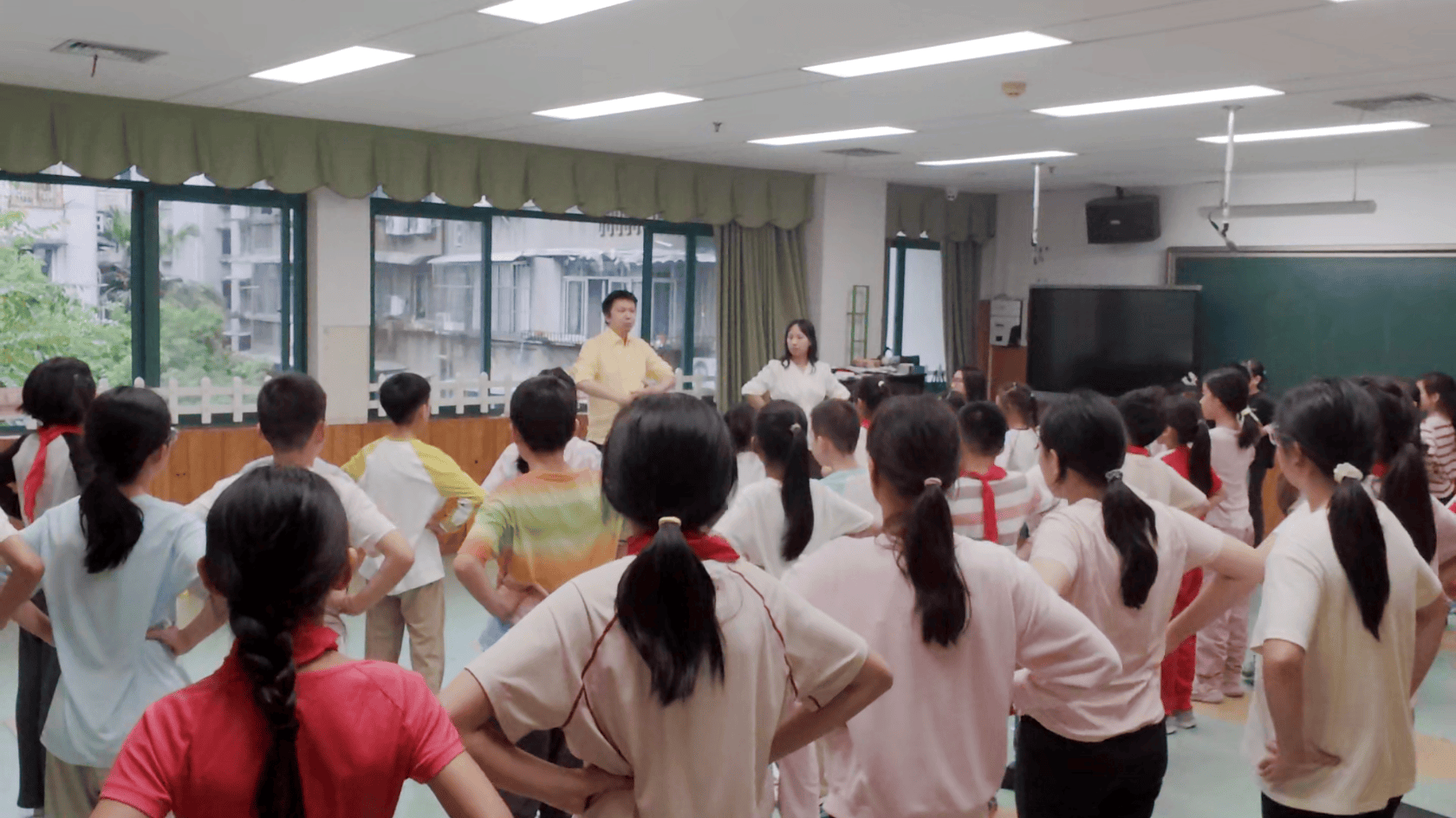
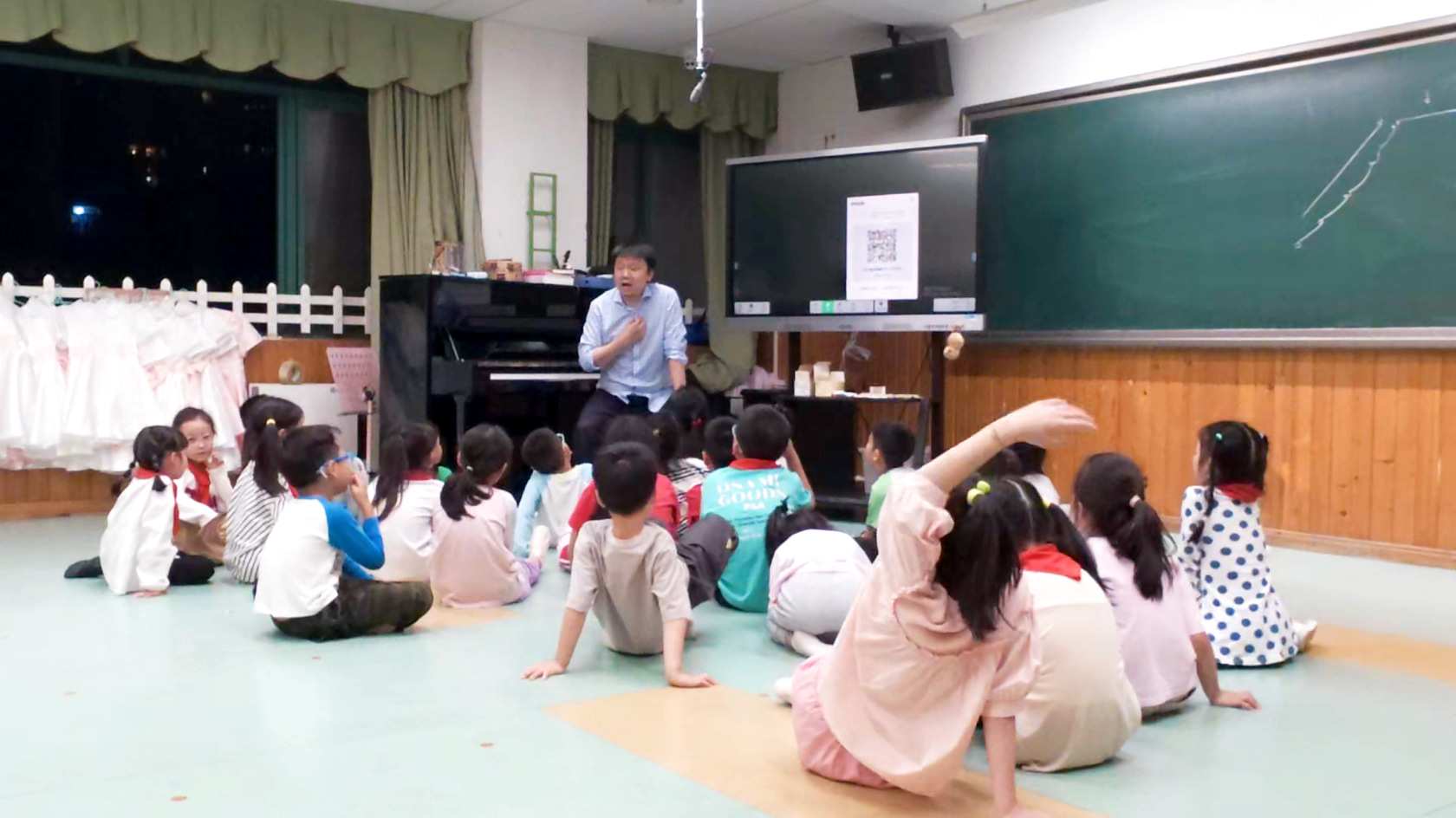
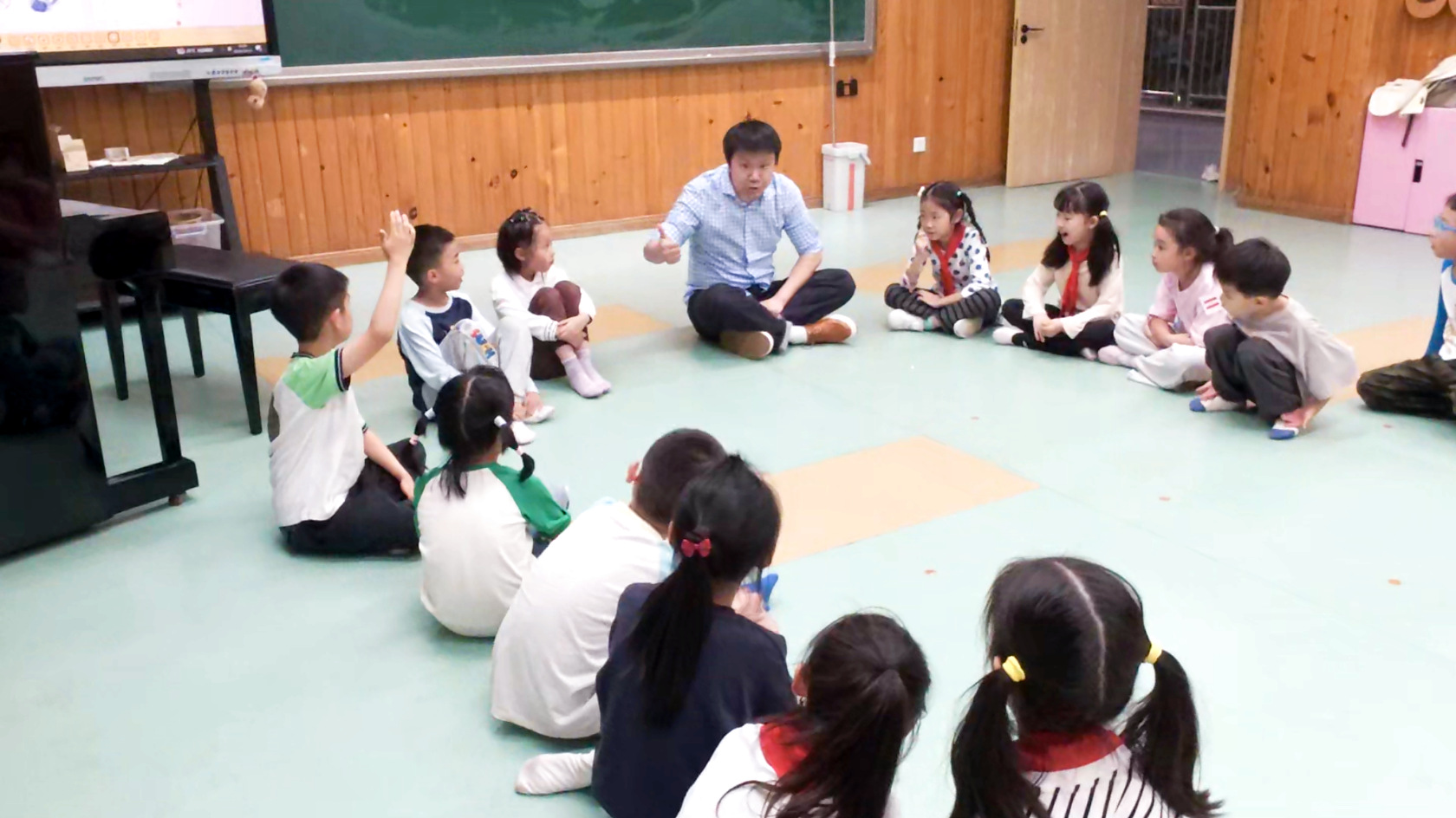
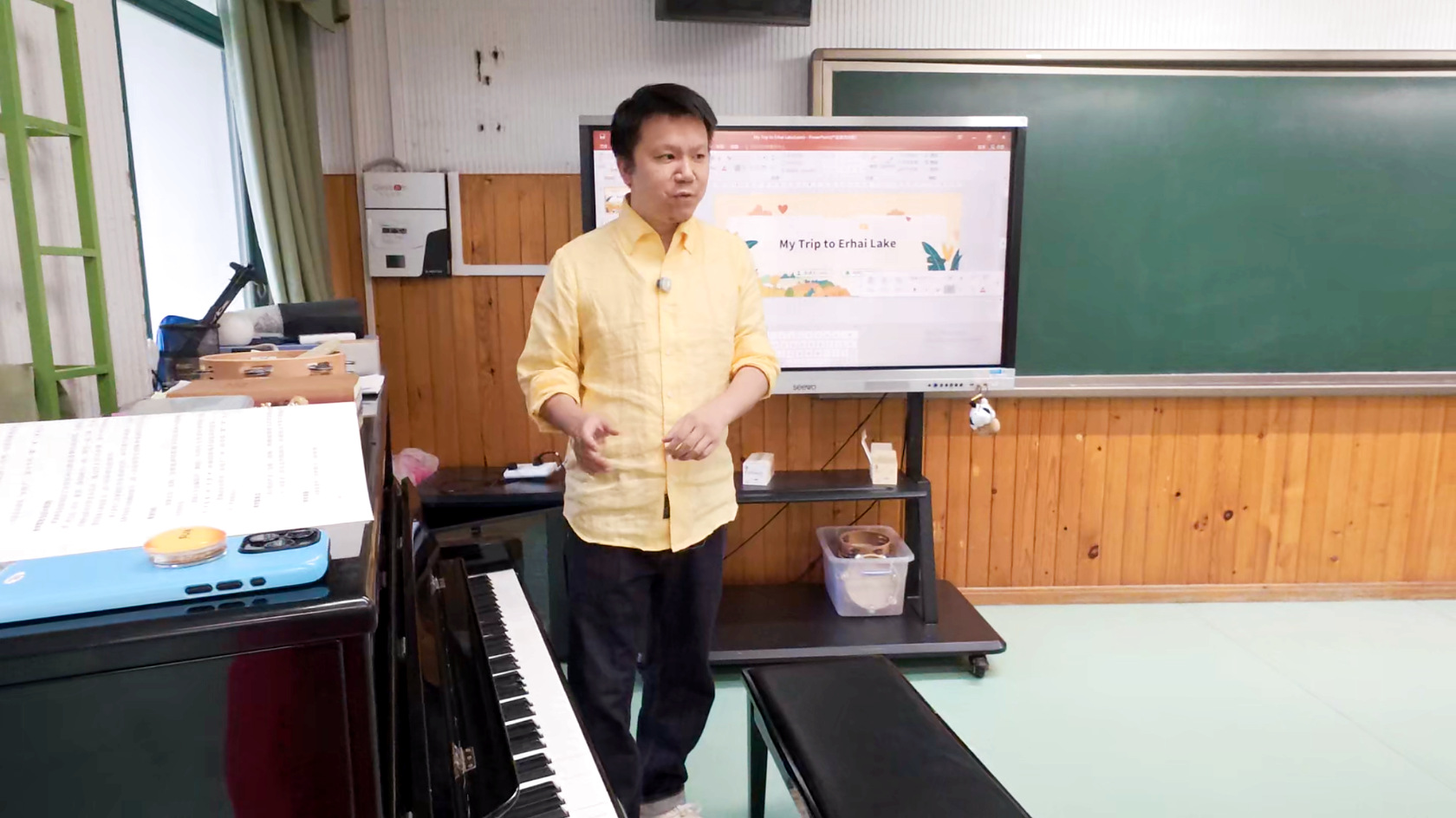
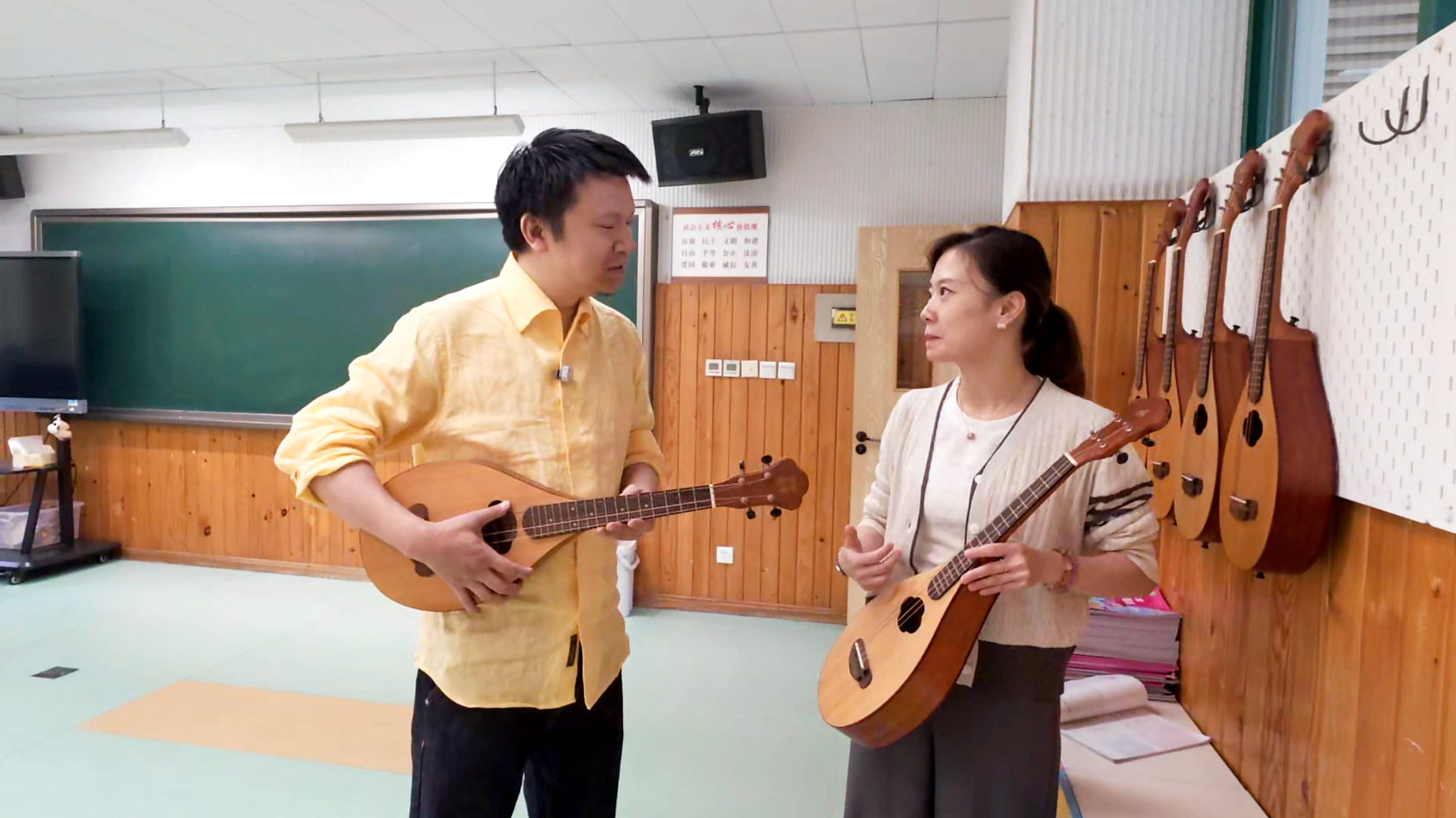
Musical theatre classes at Longnan Primary School, Chengdu, 08/2026. Photographs courtesy of Yuechuan Wu.
Research Background
In an exploratory pre–post study of children aged five to seven, singing competency improved during a school-based singing programme (Welch & Baxter, 2025). Among middle- and high-school drama students, a brief voice-training workshop was associated with improved self-reported preparedness for vocal performance (Fritz et al., 2026). Research in children with voice disorders also shows that completion of instrumental voice assessments varies with age, highlighting the need for age-appropriate assessment procedures (Fujiki et al., 2025). These findings inform the proposed training and assessment methods. Whether musical theatre training changes glottal contact, and how classroom routines relate to it, remain open questions.
References
Fritz, R., Porcaro, C. K., & Gollery, T. (2026). Effectiveness of vocal training techniques in school-aged drama students. Journal of Voice, 40(3), 915.e9–915.e17. https://doi.org/10.1016/j.jvoice.2023.11.012
Fujiki, R. B., Venkatraman, A., Godbout, R. A., & Thibeault, S. L. (2025). Instrumental voice evaluation in children: What are we getting? American Journal of Speech-Language Pathology, 34(6), 3076–3090. https://doi.org/10.1044/2025_AJSLP-25-00161
Welch, G. F., & Baxter, H. (2025). Singing, health and wellbeing in young children. Frontiers in Psychology, 16, Article 1595834. https://doi.org/10.3389/fpsyg.2025.1595834
Collaboration
Researchers, clinicians and educators with related interests are welcome to explore collaboration. Please contact yuechuan.musical@gmail.com.

